
How many restrooms does a farm crew need?
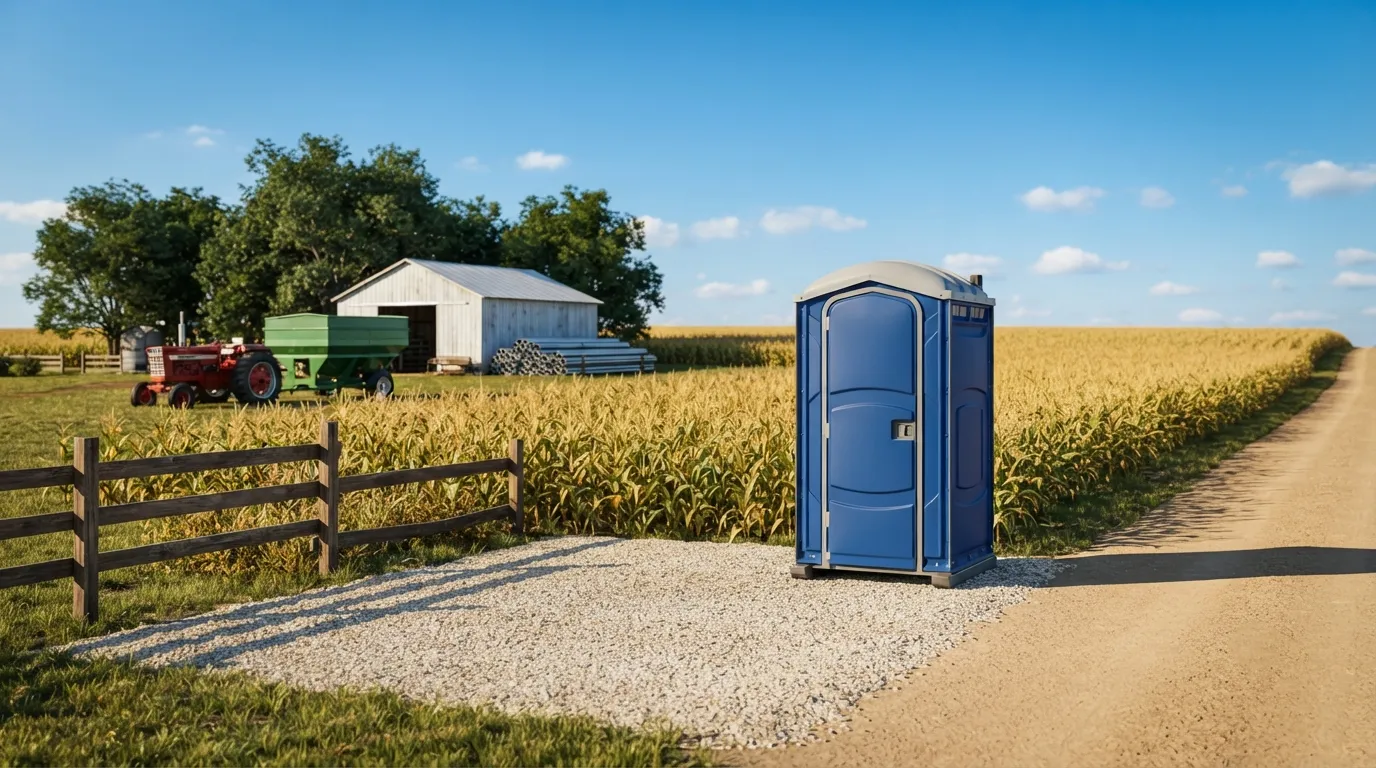
Start with headcount, then work out walking distance. OSHA 1928.110 sets the baseline for hand-labor agricultural work: one toilet and one potable water point per 20 employees, and no worker should have to walk more than a quarter mile to reach one. On a spread-out property that means more than one cluster of units, not one bank of them by the gate. National City Porta Pros maps crew zones first, then places standard porta potty rental units at each cluster so nobody loses ten minutes of picking time walking back to a single restroom. A standard unit holds a 60 to 70 gallon tank and measures about 44 by 48 inches on the ground, small enough to sit at the end of a row without blocking equipment. For row crop operations that shift plots weekly, ask about the porta potty placement guide before delivery day, since tractor turns and irrigation lines both affect where a unit can safely sit. Larger operations near Bonita, 7.4 miles east, often split an order between two field zones instead of hauling crews to one spot. Potable water matters here too. OSHA 1926.51(a)(1) requires an adequate supply of drinking water at any place of employment, and that pairs naturally with a handwashing station rental placed next to each toilet cluster.
Do farm restrooms need handwashing stations too?
Yes. Field sanitation rules bundle water, toilets and handwashing together, not as separate add-ons. OSHA 1928.110 covers all three for hand-labor crews, and 29 CFR 1910.141(d)2) requires soap and towels or a hand-drying device wherever washing facilities are provided, since hand sanitizer alone does not satisfy that rule. National City Porta Pros pairs each toilet cluster with a portable sink rental or a hand sanitizer station rental depending on what the crew handles daily. If workers are applying pesticides or other spray treatments, OSHA 1926.51(f)(1) requires washing facilities specifically for that contaminant exposure, which is a stricter trigger than general field sanitation. That is common on citrus and row crop operations around National City where spray schedules run weekly. Full handwashing requirements cover what counts as compliant versus what does not. For packing sheds or processing areas with more foot traffic, a 4 stall restroom trailer or 2 stall restroom trailer handles higher volume better than scattered single units, and it keeps handwashing under one roof instead of spread across the property.
What do farm restroom rentals cost in National City?
Pricing depends on unit count, rental length and how far the crew works from the road. A single standard porta potty rental unit runs in the range below, and multi-unit farm accounts typically land on a weekly or monthly term rather than daily.
| unit | day | week | month |
|---|---|---|---|
| standard | $100 - $350 | $130 - $500 | $125 - $325 |
| ada | $200 - $400 | $200 - $240 | - |
| delivery fee | $100 - $500 | $100 - $150 | $120 - $420 |
Seasonal harvest crews often run weekly service under ANSI/PSAI Z4.3's baseline interval of one visit per week for up to 10 users over a 40 hour week; bigger crews need more frequent pumping or more units to stay under that ratio. Full detail on term pricing sits on the monthly porta potty rental and porta potty rental cost pages. If the crew includes anyone with a mobility limitation, ADA Standards section 213.2 requires at least one accessible unit in any cluster of portable toilets, covered on the ADA accessible porta potty page. Farms near Imperial Beach, 9.0 miles south, and Lemon Grove, 7.7 miles northeast, both fall inside National City Porta Pros' regular delivery route, so multi-site orders do not carry extra trip charges beyond the standard delivery fee band.
Grease or wash-water byproducts from packing operations follow different rules than field toilets. If the farm runs a wash station or food-handling area, ask about grease trap pumping, since interceptors get pumped once fats, oils, grease and solids reach 25 percent of liquid depth. Farms with an existing septic system for a farmhouse or bunkhouse should check the how often to pump a septic tank page too, since a typical residential tank needs pumping every 3 to 5 years depending on size and household count. For full-property planning, the construction site services and farm and agricultural restrooms pages both link back to the main portable toilet rental hub for National City.
How far apart should restrooms be placed on a large farm?
OSHA 1928.110 sets the limit at a quarter mile walk, one way, for hand-labor crews. On a large parcel that means multiple clusters, not one central bank of units. National City Porta Pros walks the property line with the farm manager to place each cluster inside that distance.
Can I rent just one unit for a small crew?
Yes. A crew of 20 or fewer meets OSHA 1928.110 with a single toilet and water point. Daily and weekly terms both work; check the porta potty rental per day page for short jobs under a week.
Do you deliver to farms outside National City proper?
Yes. Bonita sits 7.4 miles east and Lemon Grove 7.7 miles northeast, both inside the regular delivery zone. Check the service areas page for the full list before requesting a quote.
What happens during harvest season when crew size doubles?
Unit count and pump frequency both need adjusting. ANSI/PSAI Z4.3's one-visit-per-week baseline assumes 10 users over 40 hours, so doubled crews need either more units or twice-weekly service. Call ahead of harvest to lock in a schedule.
Are handwashing stations required even for a small field crew?
Yes, under OSHA 1928.110's field sanitation rule for hand-labor agricultural work. It bundles potable water, toilets and handwashing as one requirement, not three separate options, regardless of crew size.
Next step
Get a delivery date
Tell us the address, the dates and the headcount. We size the order and confirm the route.