
How many restrooms does a race actually need?
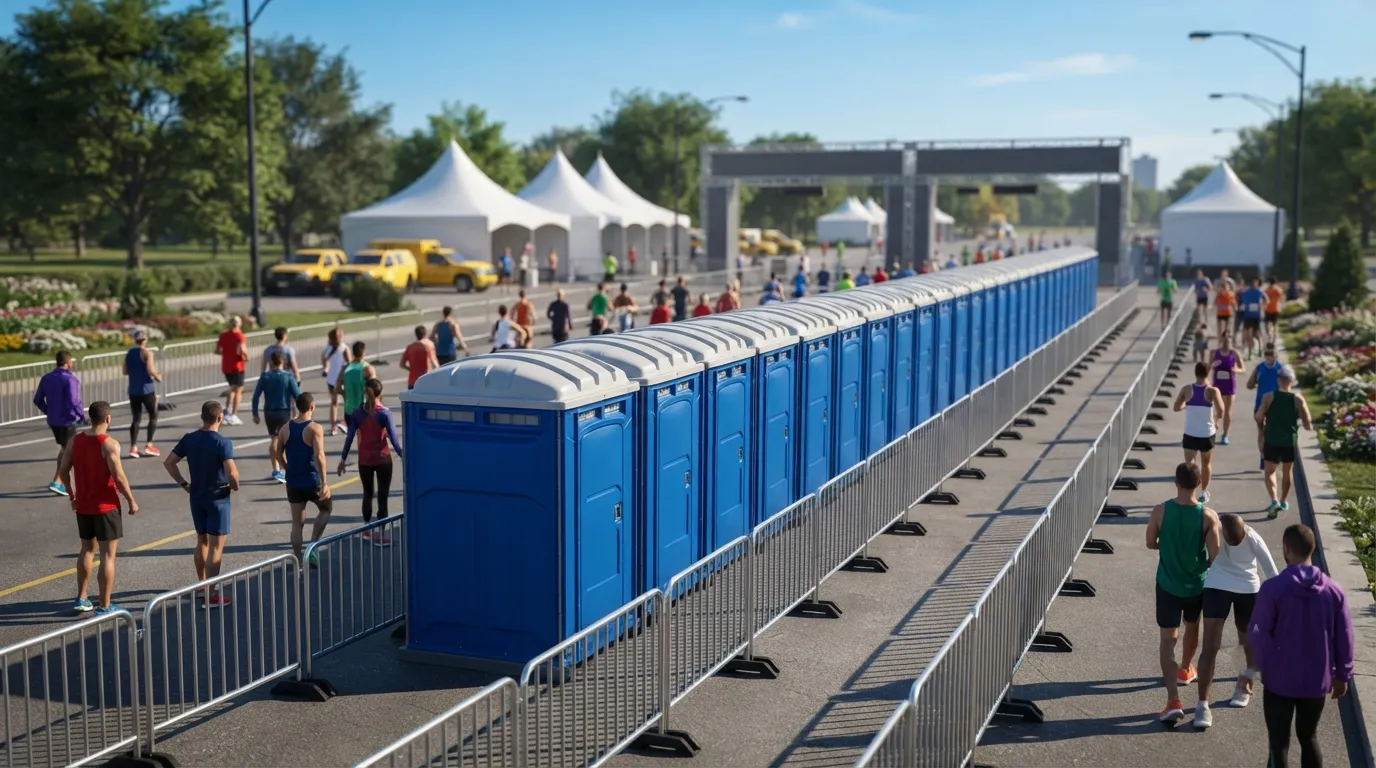
Start with the start line and finish line, because that is where runners cluster before the gun and again right after. A packed corral needs more capacity than a spread-out course ever will. OSHA 1926.51(c) sets construction toilet ratios, and while a race isn't a job site, race directors in National City use the same logic organizers everywhere borrow from it: figure roughly one unit per 100 to 150 participants at the busiest cluster points, then thin that out along the route where runners pass through rather than gather. A standard porta potty rental covers most of the course. Near the finish, where spectators and finishers overlap for an hour, add extra units and at least one ADA accessible porta potty, since ADA Standards section 213.2 requires at least 5 percent of a cluster to be accessible units, never fewer than one. Water stations along the route also need thought; pair them with a handwashing station rental so volunteers handling cups and food aren't working bare-handed all day. If your event pulls a big out-of-town field, check our porta potty placement guide for where units actually belong on a course map, not just how many. Not sure on your count? The how many porta potties do I need guide walks through headcount math step by step, and our request a quote form gets you a real number back same day.
Where do restrooms go on a race course?
Placement matters more than raw count. Units belong at the start corral, every second or third mile marker, major aid stations, and the finish chute, with turnaround room for our delivery trucks. A roll-off truck or restroom trailer typically needs about 60 feet of straight clearance behind it to set down safely, so parking lots and wide shoulders work better than narrow residential streets. If your course runs near any staging area with generators or a light tower, coordinate cabling early: a temporary power pole has to be properly guyed or braced against wind and cable tension, not just set upright and left, since a leaning pole near a runner lane is a hazard nobody wants on race morning; knowing how to brace a temporary power pole with proper guying before race day matters more than fixing it after the field is already running. The same goes for a light tower rental used for early starts or evening finishes. For crowd flow at the finish line, crowd control barrier rental keeps runners separated from restroom lines and staging equipment. Races that also need road closures or fenced staging zones often pair units with temporary fence rental around generators, water trucks and medical tents. If your course crosses into a neighboring town, National City Porta Pros also services Bonita, 7.4 miles east, and Imperial Beach, 9.0 miles south, so a point-to-point race isn't a problem.
Should you rent a restroom trailer instead of standard units?
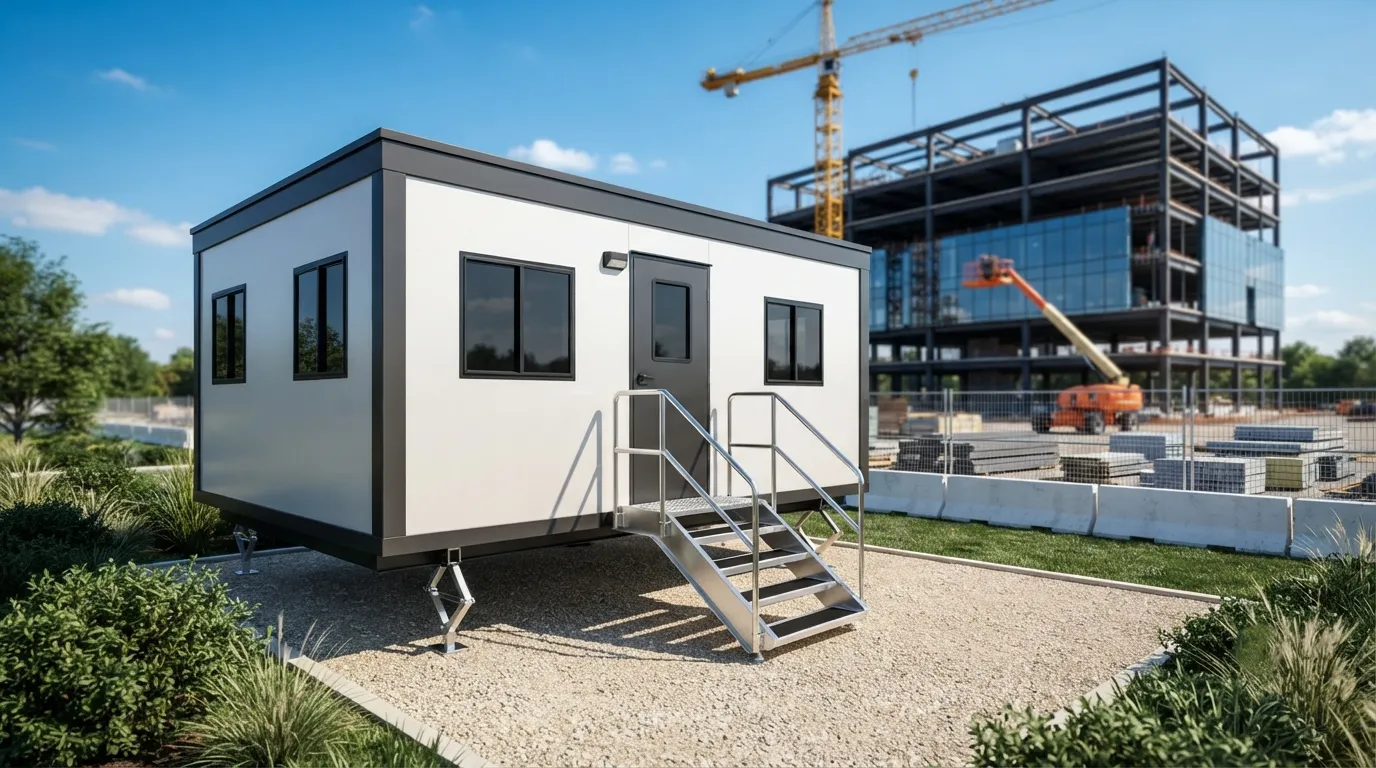
For a marathon with VIP tents, timing staff, or a sponsor village, a restroom trailer upgrades the experience without adding headcount to your standard unit order. A 2 stall restroom trailer handles a small staging area; larger races with elite athlete tents or long award ceremonies often step up to a 4 stall restroom trailer or 8 stall restroom trailer near the finish. These need level, firm ground, consistent with ADA Standards section 302.1 requiring stable, slip-resistant surfaces at accessible routes. Pair a trailer with a deluxe flushable porta potty cluster for overflow, and keep a porta john rental or two near medical tents for volunteers. National City events near the water sometimes want a shower trailer rental for post-race athlete use too. Whatever mix you land on, book early: race weekends compete with weddings and festivals for the same trailer inventory across the region, including Coronado, 9.4 miles west, and Lemon Grove, 7.7 miles northeast.
| unit | duration | typical price |
|---|---|---|
| standard | weekend | $250 |
| ada | weekend | $240 |
| trailer | weekend | $2,000 |
| standard | event | $400 |
| trailer | event | $3,500 |
Full detail lives on our porta potty rental cost and restroom trailer rental cost pages, and event restroom rental covers general event planning beyond race day specifically.
How far in advance should we book race restrooms?
Book 4 to 6 weeks out for a mid-size marathon, sooner for spring and fall race season when weekend inventory tightens fastest. Confirm headcount and course map early, then adjust unit count once registration numbers firm up closer to the date.
Do we need permits for restroom placement on public streets?
Placement in the public right of way needs confirming with National City directly; requirements vary by street and event size. Check our porta potty permit requirements page, then contact the city before finalizing your course map.
Can units be serviced mid-race if the field is large?
Yes. For large fields, we schedule a mid-event service pass at high-traffic clusters like the finish line, consistent with the weekly baseline interval described in ANSI/PSAI Z4.3 but compressed for single-day heavy use.
What about handwashing for volunteers at aid stations?
Volunteers handling cups and food need real handwashing, not just sanitizer, since 29 CFR 1910.141(d)(2) requires soap and towels or a drying device at wash stations. A portable sink rental at each aid station covers this cleanly.
Can we get restrooms delivered the same week as the race?
Often yes, depending on inventory, though weekend rates run higher than weekday booking. Call ahead with your course map and headcount; our emergency porta potty rental line handles late bookings when standard lead time isn't possible.
Next step
Get a delivery date
Tell us the address, the dates and the headcount. We size the order and confirm the route.